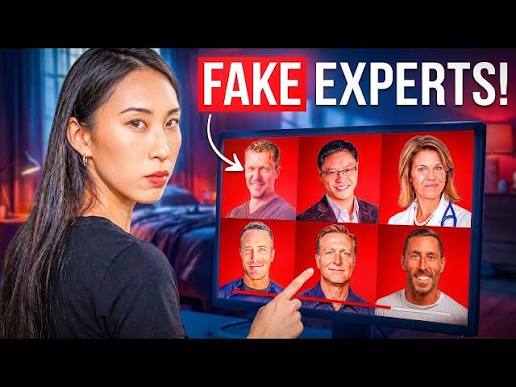
The YouTube video titled “7 Red Flags of Health Influencers (Who I Actually Watch vs. Avoid)” serves as a critical guide for navigating the saturated landscape of online wellness advice.
With over 50% of Gen Z citing TikTok as a primary health information source, the content addresses the urgent need to distinguish between qualified professionals and those spreading potentially harmful misinformation. The video likely categorizes influencers into those who provide evidence-based, transparent advice versus those driven by sales, anecdotal evidence, and unrealistic body standards.
Key Red Flags to Identify
The core of the video focuses on specific warning signs that indicate an influencer may not be a trustworthy source of medical or wellness information. A primary red flag is the lack of verifiable credentials, where creators use self-appointed titles like “nutritionist” or “coach” without formal education such as a Registered Dietitian (RD) or medical degree. Another significant warning is the promotion of “thinspiration” or exercise solely as a tool for weight loss, which can foster body shame rather than genuine health.
Furthermore, the video likely highlights the danger of anecdotal evidence presented as universal fact. Influencers often share personal success stories without scientific backing; studies show that over half of health claims made by popular Instagram accounts lack available evidence. Viewers are warned to be skeptical of “miracle cures” and quick fixes, such as promises to “heal Hashimoto’s in 30 days,” which ignore the complexity of individual biology and medical conditions.
The YouTube video “7 Red Flags of Health Influencers (Who I Actually Watch vs. Avoid)” serves as a critical guide for navigating the saturated landscape of online health advice.
It distinguishes between credible experts who provide evidence-based information and “wellness influencers” who may prioritize profit over patient safety. The core message emphasizes that while social media can be a valuable resource, viewers must apply rigorous scrutiny to avoid misinformation, dangerous fads, and financial exploitation.
The 7 Critical Red Flags
The video outlines seven specific warning signs that indicate a health influencer may not be trustworthy. These flags often overlap with broader patterns of health misinformation found across platforms like TikTok and Instagram.
- Lack of Verified Credentials: A primary red flag is the absence of formal education or recognized certifications. Titles like “nutritionist” or “lifestyle coach” can be self-appointed, whereas credentials such as Registered Dietitian (RD) or Bachelor of Science in Nursing (BSN) require rigorous training. Influencers who cannot prove their training or rely solely on personal experience without scientific backing are risky sources.
- Promotion of “Miracle Cures” and Quick Fixes: Credible health advice rarely involves instant results. Influencers promising to “cure” complex conditions like thyroid issues or cancer with a single product, juice cleanse, or supplement are spreading misinformation. Real medical treatments are validated through clinical trials, not anecdotal success stories.
- Financial Conflicts of Interest: Many influencers promote products—such as supplements, detox teas, or unproven medical tests—without disclosing that they earn a commission. Studies show that a significant majority of posts promoting specific medical tests come from accounts with financial interests, often omitting potential harms like overdiagnosis.
- Fear-Mongering and Anti-Science Rhetoric: Unreliable creators often use alarmist language to trigger emotional responses, claiming that “doctors don’t want you to know this” or labeling mainstream medicine as “Big Pharma lies.” This tactic is designed to shut down critical thinking and create a dependency on the influencer’s specific solution.
- One-Size-Fits-All Advice: Health is highly individualized. Influencers who demonize entire food groups (e.g., “gluten is toxic for everyone”) or claim their method is the “only way” to be healthy are ignoring biological diversity. Credible experts acknowledge nuance and the complexity of individual genetics and lifestyles.
- Reliance on Anecdotal Evidence Over Data: While personal stories can be inspiring, they are not scientific proof. A major red flag is when an influencer presents their own recovery or transformation as universal truth without citing peer-reviewed studies or clinical guidelines. Research indicates that over half of health claims made by popular influencers lack available evidence.
- Defensiveness and Lack of Accountability: Trustworthy professionals welcome constructive criticism and correct mistakes. Influencers who become hostile, dismissive, or defensive when questioned about their claims or credentials are often hiding a lack of expertise or integrity.
Comparative Analysis: Credible vs. Non-Credible Influencers
The following table contrasts the behaviors and characteristics of trustworthy health sources versus those that should be avoided, based on the criteria highlighted in the video and supporting research.
| Feature | Credible Health Influencer | Non-Credible Health Influencer |
| Credentials | Lists verified degrees (MD, RD, PhD) and licenses; easy to verify. | Uses vague titles like “coach” or “guru”; credentials are self-appointed or unverified. |
| Evidence | Cites peer-reviewed studies, clinical guidelines, and reputable organizations (WHO, CDC). | Relies on personal anecdotes, “trust me” statements, and vague references to “studies.” |
| Product Promotion | Discloses sponsorships clearly; promotes products they genuinely use; avoids “miracle cures.” | Aggressively sells supplements or tests as “magic bullets”; hides financial conflicts of interest. |
| Tone & Language | Uses nuanced language (“may,” “sometimes”); acknowledges individual differences. | Uses absolute claims (“always,” “never,” “cures everyone”); creates fear or shame. |
| View on Medicine | Collaborates with or respects mainstream medical advice; encourages professional consultation. | Dismisses doctors as corrupt; promotes conspiracy theories about the medical establishment. |
| Response to Criticism | Engages respectfully with feedback; admits errors and updates information. | Becomes defensive, hostile, or blocks critics; refuses accountability. |
| Focus | Promotes sustainable, long-term lifestyle changes and balance. | Focuses on short-term aesthetic transformations and extreme, unsustainable diets. |
10 Real-World Examples of Misinformation to Avoid
Based on the patterns identified in the video and broader health misinformation research, here are ten specific examples of claims or trends that serve as practical applications of the red flags:
- Celery Juice as a Thyroid Cure: Claims that drinking celery juice can reverse hypothyroidism or “heal” the thyroid without medication are unfounded and dangerous for those requiring hormone replacement.
- Full-Body MRI Scans for Healthy People: Influencers often promote these expensive scans as essential preventative care, despite a lack of evidence for benefits in healthy populations and high risks of overdiagnosis.
- “Detox” Teas and Liver Cleanses: The body detoxifies itself via the liver and kidneys; products claiming to “flush toxins” are unnecessary and can sometimes cause liver toxicity.
- Eating Oranges with Peels and Cayenne: Viral trends suggesting eating whole oranges with peels and spices for instant bowel movements can irritate the stomach lining and cause digestive distress.
- Supplements Curing Cancer: Promoting vitamins, mushrooms, or specific diets as a standalone cure for cancer is a lethal form of misinformation that delays proven medical treatment.
- AMH “Egg Timer” Tests for Fertility: Marketing anti-Mullerian hormone tests to healthy women as a definitive measure of fertility can lead to unnecessary anxiety and costly, unneeded fertility treatments.
- Perfume Causing Thyroid Issues: Claims that spraying perfume on the neck directly causes thyroid disease are scientifically unsupported fear-mongering.
- Extreme Fasting for Skin Clarity: Advising teenagers or vulnerable groups to undertake extreme fasting protocols for skin improvement can lead to severe nutritional deficiencies and vision loss.
- Gut Microbiome Tests for Depression: Selling direct-to-consumer gut tests as a diagnostic tool for mental health conditions like depression lacks robust clinical evidence and can lead to mismanagement of care.
- Testosterone Therapy for “Low T” Without Diagnosis: Encouraging healthy men to take testosterone based on vague symptoms without blood work ignores serious cardiovascular risks and potential side effects.
The “Analyst” Perspective: A Myers-Briggs Style Breakdown
While the video itself does not administer a Myers-Briggs Type Indicator (MBTI) test, we can apply an analyst framework to help viewers determine their own susceptibility to influencer marketing and how to best process health information. This approach categorizes viewer tendencies to suggest personalized strategies for critical thinking.
The Skeptical Analyst (Logical & Evidence-Based)
- Traits: Questions claims immediately, seeks data, distrusts emotional storytelling.
- Strategy: Focus on verifying citations. If an influencer mentions a study, look up the abstract on PubMed. Ignore content that lacks links to primary sources.
- Best For: Filtering out pseudoscience and financial scams.
The Empathic Follower (Emotional & Relational)
- Traits: Connects deeply with personal stories, wants to trust the influencer’s journey, may feel shame if results aren’t replicated.
- Strategy: Recognize that “relatability” is not “expertise.” Separate the influencer’s personal anecdote from general medical advice. Ask: “Does this work for everyone or just them?”
- Best For: Avoiding the trap of buying products solely to support a creator you like.
The Optimizer (Goal-Oriented & Efficient)
- Traits: Looks for “hacks,” quick fixes, and maximum results in minimum time. Highly susceptible to “miracle cure” claims.
- Strategy: Remember that biological change takes time. If a claim sounds too efficient (e.g., “lose 20 lbs in 1 week”), it is biologically impossible or dangerous. Prioritize sustainability over speed.
- Best For: Resisting the allure of dangerous fad diets and extreme challenges.
The Harmonizer (Balance-Seeking & Holistic)
- Traits: Interested in wellness but easily confused by conflicting advice; wants a “natural” approach.
- Strategy: Beware of influencers who demonize mainstream medicine or specific food groups. True holistic health integrates scientific medicine with lifestyle changes, rather than rejecting one for the other.
- Best For: Navigating the middle ground between “Big Pharma” conspiracy theories and rigid medical dogma.
Note: We do use YouTube Video’s under the “Fair Use” Act under the Copyright Law:
“Fair use is a doctrine in the United States copyright law codified in Section 107 of the Copyright Act of 1976.1 It provides for the legal, non-licensed citation or incorporation of copyrighted material in another author’s work without requiring permission from the rights holders, such as for commentary, criticism, news reporting, research, teaching or scholarship.01 The U.S. Copyright Office Fair Use Index should prove helpful in understanding what courts have to date considered to be fair or not fair but it is not a substitute for legal advice.2“
Check out our last minute travel deals: Travelanycountry.com

Save Up To 60% Off Hotels, Flights, Cruises, Rental Cars More…
Product Reviews Ebay.com, Walmart.com, Clickbank, Cabela’s And More…
Women Product Reviews
- Women’s Handbags And Purses At Your Local Walmart Or Online Near Me!
- Women’s Clothes At Your Local Walmart Or Online Near Me!
- Kate Spade New York Women’s Carlyle Medium Shoulder Handbag – Black
- Kate Spade Leila Medium Gingerbread Leather Triple Compartment Satchel Handbag Product Review From Walmart
- MKF Collection Gabriella Handbag with Wallet by Mia K.
- MKF Collection Bonita Checkered Tote 2 Pcs Women’s Large Handbag with Wallet and Decorative M keychain by Mia k.
- Michael Kors 35H1T2Jt1C Jodie Small Logo Jacquard Tote Bag In Atom Green
- Michael Kors Gilly Drawstring Large Top Zip Tote Ballet Pink Mk Signature
- Michael Kors 35F1GTVT3B Jet Set Travel Large Chain Shoulder Tote Bag MK Signature Brown
Product Reviews – Apples Phones, TV, Ipads, Laptops, Watches
- Apple Watch Series 8 [GPS 41mm] Smart Watch w/Midnight Aluminum Case with Midnight Sport Band – S/M. Fitness Tracker, Blood Oxygen & ECG Apps, Always-On Retina Display, Water Resistant Product Review
- Apple AirTag 4 Pack
- Apple AirPods Pro (2nd Generation) Wireless Earbuds, Up to 2X More Active Noise Cancelling, Adaptive Transparency, Personalized Spatial Audio, MagSafe Charging Case, Bluetooth Headphones for iPhone
- Apple Watch Series 3 GPS Silver – 42mm – White Sport Band
Product Reviews – Camera’s, Gimbal’s, Video Equipment.
Canon EOS M50 Mark II + EF-M 15-45mm is STM Kit Black Product Review
Other Product Reviews – Lawncare, Tools, Fishing Gear.
LeanBiome – BRAND NEW Weight Loss Offer!! – Product Review – Clickbank
Liv Pure – Product Review From Clickbank
Troy-Bilt Pony 42″ Riding Lawn Mower Tractor with 42-Inch Deck and 439cc 17HP Troy-Bilt Engine
Call Mike Richards Today At Ashley Furniture At Polaris Columbus, Ohio Today!
Costway 6.3 Quart Tilt-Head Food Stand Mixer 6 Speed 660W w/Dough Hook, Whisk Black
I COMPARE 4 RVs: Campervan, Class C, 5th Wheel & Truck Camper. 20 Factors to Consider
Offshore Angler Tightline II Spinning Reel
Lodge Tall Boy Camp Dutch Oven Tripod
Bear Archery Species EV RTH Compound Bow Package
Minn Kota Terrova Bow Mount Freshwater Trolling Motor with i-Pilot GPS Trolling System
Cabela’s Treadfast GORE-TEX Insulated Hunting Boots for Men
Classic Accessories Over Drive RV Sway Bar Hitch Tote, Black
Hughes Autoformers Power Watchdog Portable RV Bluetooth Surge Protector, 30 Amp
2021 Apple 10.2-inch iPad Wi-Fi 64GB – Space Gray (9th Generation)
2022 Apple 10.9-inch iPad Wi-Fi 64GB – Silver (10th Generation)
Black Max 21-inch 3-in-1 Self-Propelled Gas Mower with Perfect Pace Technology
Best Choice Products 6V Portable Sewing Machine, 42-Piece Beginners Kit w/ 12 Stitch Patterns – Teal
Please visit our Sponsors: