Childhood survival mechanisms—developed to navigate chaotic or neglectful environments—often persist into adulthood, sabotaging intimacy and trust. Examples include emotional numbing, people-pleasing, and severe hyper-independence. Transforming these requires recognizing these habits, “re-parenting” oneself with compassion, and choosing vulnerability to build mature, secure connections. 10 Childhood Survival Skills Sabotaging Adult Relationships Childhood Survival Skill How It Sabotages Adult
Your Childhood Survival Strategy is Killing Your Relationship
It’s a tough pill to swallow, but the habits that kept you safe or sane as a kid often act like a “manual” for how you handle conflict and intimacy as an adult. What worked then to protect you is likely what’s creating distance now. Here is a breakdown of common childhood survival strategies and how they
The Lie About Polyamory Nobody Wants to Admit
The phrase “The Lie About Polyamory Nobody Wants to Admit” appears to be a provocative title used across social media platforms (YouTube, Reddit, Instagram, X) to attract attention, but no single definitive source or consensus identifies exactly what this “lie” is. Instead, based on the search results and broader discourse in polyamorous communities, the “lie” likely refers to the myth that
Women in Love vs. Men in Love
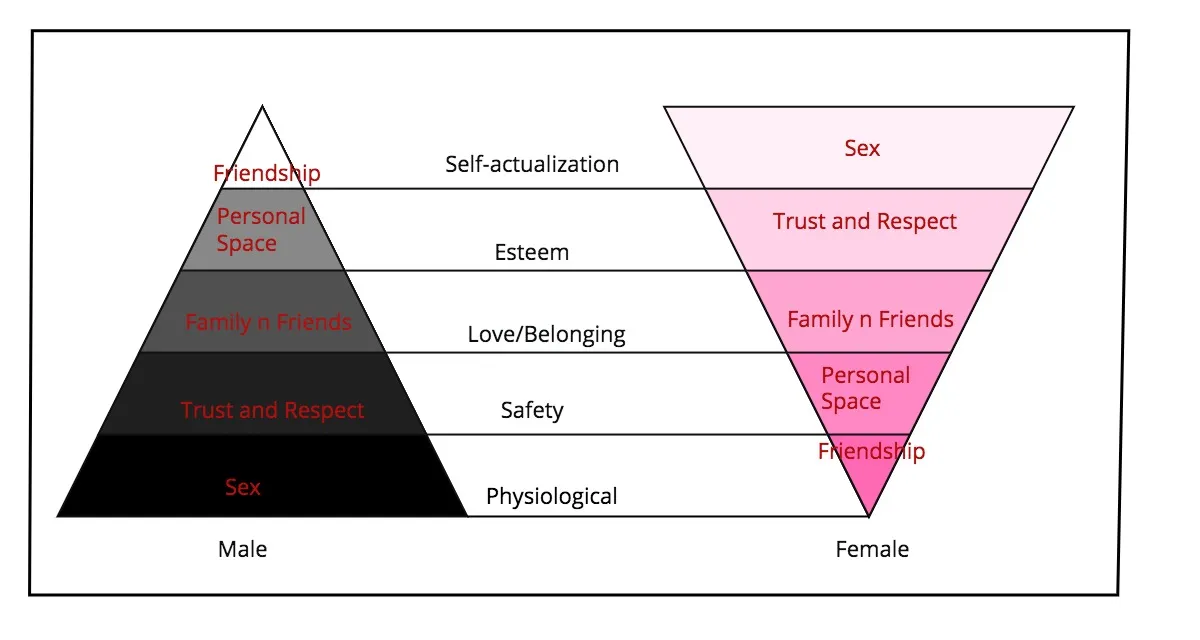
Women in Love vs. Men in Love: Key Differences Research and observations highlight distinct patterns in how men and women typically experience and express love. While individual differences are significant, general trends emerge across psychological, emotional, and behavioral dimensions. Below is a comparative table outlining 10 key differences between women and men in love, based
How to Read the Bible like a Scholar
To read the Bible like a scholar, one must transition from “eisegesis” (reading personal opinions into the text) to exegesis, which is the critical investigation of a text’s original meaning in its historical and literary contexts. This academic approach treats the Bible not just as a single book, but as a complex collection of 66 books
Anthropic Didn’t Build a New Browser. They Did Something Smarter.
Anthropic did not build a new standalone browser; instead, they developed a “computer use” capability that allows Claude to interact with any existing interface—including browsers and desktop applications—as a human would. Rather than navigating the web through a specialized AI-only portal, Claude “looks” at a screen, determines coordinates for interactive elements, and executes actions like
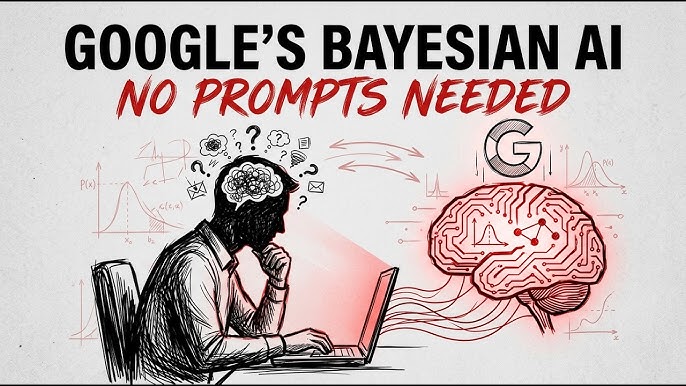
Forget Prompting — Google’s Bayesian AI Figures You Out Without Being Asked
Google’s Bayesian AI represents a shift from traditional prompting by leveraging probabilistic reasoning to infer user intent without explicit instructions. Instead of relying on detailed prompts, these models use Bayesian inference to predict user needs based on context, behavior, and prior interactions. Below are 10 examples illustrating how Google’s Bayesian AI can infer user intent without being asked directly:
Google’s 30+ FREE AI Tools WIPED OUT $1,000.00/Month Subscriptions (Software Companies Are Terrified)
Google has quietly launched a suite of powerful, free AI tools that are replacing paid alternatives, disrupting the AI software market. These tools, accessible without subscriptions or paywalls, offer production-ready capabilities across web development, automation, content creation, and more—directly challenging tools that once cost $20–$50/month. Here are 10 standout free AI tools from Google that are making paid
Eahora Romeo Ultra II vs Aniioki A9 Pro Max – Which Is Better?
The Eahora Romeo Ultra II and Aniioki A9 Pro Max are both high-performance, dual-motor electric bikes designed for speed, power, and long-range off-road and urban riding. While they share many similarities—such as large batteries, aggressive styling, and top speeds around 50 mph—key differences in battery capacity, motor output, build quality, and customer support influence their overall value. Based on user
The Real Reason Windows Hate Is Exploding: It’s Not Just the UI—It’s the End of Personal Computing
The growing backlash against Windows stems from a shift beyond user interface complaints—it reflects broader concerns about the end of personal computing as users once knew it. Microsoft’s increasing control over systems, forced cloud integration, and restrictions on user autonomy have led to frustration among long-time users and power users alike. Below are 10 key examples illustrating this trend: These